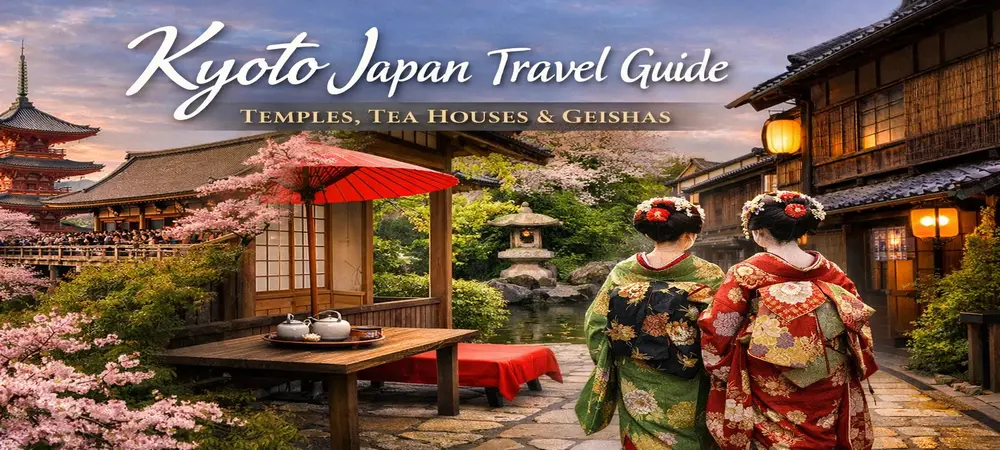


Japan rewards travelers who move between its cities by bullet train — Tokyo’s neon energy, Kyoto’s temples and geisha districts, and Osaka’s food culture are all within easy reach of each other. 6–7 days has become the most popular package length because it’s enough time to properly experience two or three cities via the Shinkansen without feeling like you’re spending your trip on trains.
Why 6–7 Days Is the Ideal Japan Trip Length
Japan’s major highlights cluster around a well-connected corridor, and 6–7 days lets you combine:
- Tokyo – modern skyline, historic temples, and neighborhood culture
- Kyoto – Japan’s former capital, packed with temples, shrines, and traditional streets
- Osaka – Japan’s food capital, with castle grounds and a lively nightlife district
- Optional day trips – Nara’s deer park, Hakone’s hot springs, or a Mount Fuji viewpoint
This is the minimum time needed to see both Tokyo and the Kansai region (Kyoto/Osaka) without a rushed one-night stop in each city.
Sample 6-Day Japan Itinerary (Tokyo + Kyoto + Osaka)
Day 1: Arrival in Tokyo Check in and ease into the city with a walk through Shinjuku or Shibuya, including the famous Shibuya Crossing, before an early dinner given jet lag.
Day 2: Tokyo Highlights Visit Senso-ji Temple in Asakusa, explore the Imperial Palace East Gardens, and spend the afternoon in Akihabara or Harajuku. Catch the view from Tokyo Skytree or Shibuya Sky in the evening.
Day 3: Tokyo Day Trip or Transfer to Kyoto Either take a day trip to Hakone for hot springs and Mount Fuji views, or take the Shinkansen bullet train directly to Kyoto (about 2 hours 15 minutes) and settle in for the evening.
Day 4: Kyoto Temples Visit Fushimi Inari Shrine’s thousand torii gates early to beat the crowds, then explore Kinkaku-ji (the Golden Pavilion) and the Arashiyama Bamboo Grove.
Day 5: Nara Day Trip & Move to Osaka Take a short trip to Nara to see the free-roaming deer and Todai-ji Temple, then continue to Osaka for the evening — Dotonbori’s neon signs and street food are the highlight of an Osaka night.
Day 6: Osaka Castle & Departure Visit Osaka Castle in the morning, do some last-minute shopping in Shinsaibashi, and head to Kansai International Airport for departure.
Extending to 7 Days: What to Add
A 7th day is best used for either:
- A proper Hakone overnight — a ryokan stay with an onsen (hot spring) and Mount Fuji views, rather than a rushed day trip
- An extra Kyoto day — for Nishiki Market, Gion’s geisha district in the evening, or Nijo Castle
Top Places to Visit in Japan
- Senso-ji Temple, Tokyo – Tokyo’s oldest and most famous Buddhist temple, in Asakusa
- Fushimi Inari Shrine, Kyoto – thousands of vermillion torii gates winding up a mountain
- Kinkaku-ji (Golden Pavilion), Kyoto – a gold-leaf-covered temple reflected in a pond
- Nara Park – free-roaming deer and Todai-ji Temple’s giant bronze Buddha
- Dotonbori, Osaka – neon signs, street food, and Osaka’s liveliest nightlife strip
- Osaka Castle – a historic castle surrounded by cherry blossom gardens
- Arashiyama Bamboo Grove, Kyoto – a striking towering bamboo forest path
- Hakone – hot springs and Mount Fuji views, popular as a day trip or overnight from Tokyo
Best Things to Do in Japan
- Ride the Shinkansen bullet train between cities
- Walk through Fushimi Inari’s torii gate tunnels at sunrise
- Feed the deer at Nara Park
- Soak in an onsen (hot spring) in Hakone
- Eat street food along Dotonbori in Osaka
- Explore Tokyo’s neighborhoods — Shibuya, Harajuku, and Akihabara
What a Good 6–7 Day Japan Tour Package Should Include
A well-structured Japan package typically bundles:
- Flights — into Tokyo (Narita/Haneda) and often out of Osaka (Kansai) to avoid backtracking
- Hotels — Tokyo, Kyoto, and Osaka, ideally near major train stations
- Activities — temple visits, Hakone hot springs, and food tours pre-booked
- Transfers — airport transfers and bullet train coordination between cities
You can build this on Ziarah. Search and book hotels in Tokyo, Kyoto, and Osaka near key train stations, compare flights for open-jaw routing between Tokyo and Osaka, add temple tours, Hakone excursions, and food experiences through activities, and arrange transfers for airports and inter-city connections.
If you’d rather not plan a multi-city Japan trip manually, generate a complete Japan package with AI by describing your preferred cities and dates, or use Ziarah’s trip planner to design a custom itinerary across Tokyo, Kyoto, and Osaka.
Once your trip is booked, Ziarah’s WhatsApp assistant sends real-time reminders, travel documents, and daily tips — useful for keeping bullet train schedules and hotel check-ins organized across three cities.
Best Time to Visit Japan for a 6–7 Day Trip
March to April is cherry blossom season, Japan’s most popular (and busiest) travel window — book well in advance. October to November brings autumn foliage, equally scenic with slightly fewer crowds. June–July is Japan’s rainy season, and August is hot and humid; December to February is cold but good for hot springs and winter illuminations, with fewer tourists overall.
Japan Tour Package FAQs
Is 6 days enough for Japan?
Yes — 6 days covers Tokyo, Kyoto, and Osaka comfortably, though a 7th day allows for a proper Hakone stop or extra Kyoto time.
Should I fly into Tokyo and out of Osaka, or return to Tokyo?
An open-jaw route (into Tokyo, out of Osaka/Kansai) is more efficient and avoids backtracking on the bullet train.
Do I need a Japan Rail Pass?
It depends on your route — for a Tokyo-Kyoto-Osaka itinerary, compare the pass cost against individual Shinkansen ticket prices, as pass value has changed in recent years.
Do I need a visa to visit Japan?
Many nationalities can visit visa-free for short tourist stays; check Japan’s official immigration guidelines before booking.
How much does a 6–7 day Japan package cost?
Costs vary by season (especially cherry blossom season), hotel category, and inclusions — you can build and price a package instantly using Ziarah’s AI package generator.