




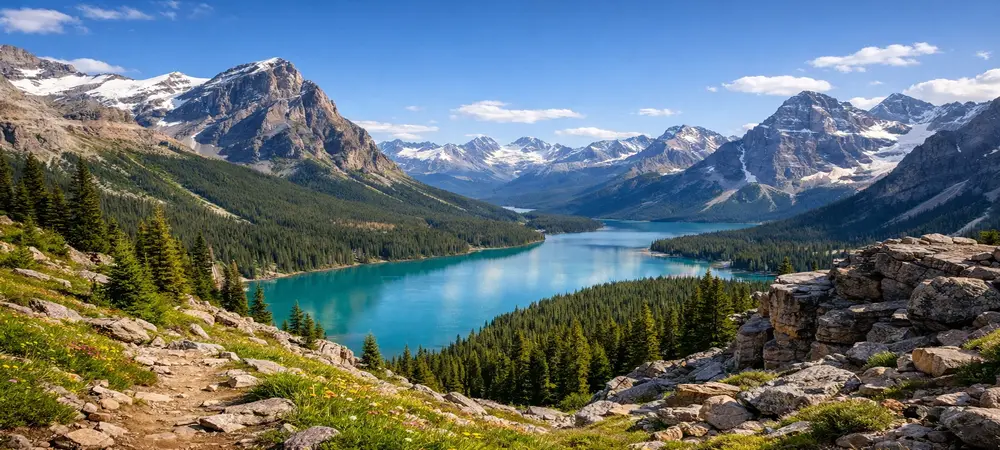
Navigating the vast beauty of Banff National Park demands a thoughtful plan to experience its world-class hiking, respectful wildlife encounters, and iconic turquoise lakes to their fullest potential. Nestled in the heart of the Canadian Rockies in Alberta, Banff offers more than just postcard views—it’s a playground for hikers, photographers, families, and anyone seeking to feel the pulse of wilderness. From dawn walks along lake shorelines to adrenaline-charged summit treks, and from quietly spotting elk along the Bow Valley Parkway to capturing the vibrant hues of Moraine Lake, every moment here can feel monumental. In this guide, we’ll cover trails for every level, essential wildlife etiquette, the best lakes for photography and exploration, and practical logistics to turn your visit into a seamless adventure. By leveraging tools like Ziarah, you can even generate a complete, AI-powered itinerary that balances hikes, scenic drives, and rest days.
First Step into the Wilderness: Understanding Banff National Park’s Grandeur
Banff National Park, Canada’s first national park established in 1885, encompasses over 6,600 square kilometers of rugged mountains, glaciers, forested valleys, and turquoise alpine lakes. It’s a UNESCO World Heritage Site and part of the Canadian Rocky Mountain Parks, offering unparalleled natural diversity. Whether you’re standing on the Icefields Parkway amid towering peaks or observing the mist rise from Lake Minnewanka at sunrise, Banff’s scale demands respect and preparation.
Seasonality is crucial: high summer (late June to mid-September) brings open trails, full-access shuttles, and ideal temperatures, while late fall through spring may restrict access to alpine trails due to snow. Wildlife activity also changes with the seasons, making planning your trip essential for safety and enjoyment.
Hiking in Banff: Trails for Every Boot, from Lakeshore Strolls to Alpine Summits
Banff offers trails for all experience levels. Here’s a breakdown:
Iconic & Accessible Hikes: Lake Louise Shoreline and Johnston Canyon
Lake Louise Shoreline Trail is a gentle 2 km loop perfect for families and photographers. The turquoise water, framed by Victoria Glacier, allows for breathtaking reflections in early morning light. For a more adventurous feel without strenuous effort, the Johnston Canyon Lower Falls Trail (~5 km round trip) features catwalks over rushing waterfalls and canyon walls.
Plain of Six Glaciers Trail: A Step Beyond the Lake Louise Crowds
This 14 km out-and-back trail begins at Lake Louise and climbs through alpine meadows toward the eponymous glaciers. The trail offers views of towering peaks and the historic tea house at the trailhead—an ideal rest stop. Expect 4–6 hours of moderate-to-strenuous hiking, with a steady incline that rewards every step with panoramic vistas.
Challenging Summit Treks: Conquering Sentinel Pass and the Beehives
For seasoned hikers, Sentinel Pass and the Beehives trail near Lake Louise present demanding ascents with scree fields, steep inclines, and altitude gain. These trails provide 360-degree views of Moraine and Lake Louise valleys, ideal for sunrise photographers. Trekking poles and layered clothing are non-negotiable here, as mountain weather shifts rapidly.
Family-Friendly Adventures: Easy Hikes with Big Rewards in Banff
Banff also caters to families seeking minimal strain but maximal impact. Trails like Fenland Trail and Bow River Loop offer easy terrain, wildlife viewing, and short walking distances. Expect to encounter elk, waterfowl, and sometimes deer along the route.
The 10 Essentials: Your Non-Negotiable Day Hike Packing List for Banff
- Water (minimum 2 liters per person)
- Snacks / lightweight trail food
- Weather-appropriate clothing layers
- Rain jacket / windbreaker
- Map or GPS device
- First aid kit
- Bear spray (available locally)
- Sun protection (hat, sunscreen, sunglasses)
- Trekking poles (optional, recommended for alpine trails)
- Fully charged phone or communication device
Wildlife in Banff: Safe and Ethical Viewing of Canada’s Iconic Animals
Banff’s wildlife is a major attraction, but viewing it responsibly is critical. Elk, bighorn sheep, black bears, and occasionally grizzly bears roam freely.
Where and When to Spot Elk, Bears, Bighorn Sheep, and More
- Bow Valley Parkway (Highway 1A): Dawn and dusk drives often reveal elk and deer grazing in meadows.
- Vermilion Lakes: Quiet early mornings attract waterfowl and beaver activity.
- Backcountry Trails: Bighorn sheep and mountain goats may appear along rocky ridges.
The Golden Rules: Safe Viewing Distances and Bear Safety Fundamentals
- Maintain a minimum of 100 meters (328 feet) from bears.
- Never feed wildlife.
- Carry bear spray and know how to use it.
- Make noise on trails to avoid surprise encounters.
- Store food securely when camping.
By following these rules, you preserve both your safety and the natural behavior of Banff’s animals.
The Lakes of Banff: A Guide to the Famous Turquoise Waters
Banff’s lakes are iconic, but timing and access make the difference between a snapshot and a memorable experience.
Lake Louise and Moraine Lake: Visiting the Icons (Permits & Timing)
Both lakes require early arrivals or Parks Canada shuttle reservations during peak summer. Moraine Lake Road typically opens in late May, with mandatory shuttle service to limit congestion. Sunrise visits reward photographers with mirrored reflections on calm waters.
Hidden Gems: Discovering Peyto Lake, Emerald Lake, and Lake Minnewanka
- Peyto Lake: A short hike from the Bow Summit viewpoint provides one of the most famous vistas in Banff.
- Emerald Lake: Located in Yoho National Park nearby, it offers canoe rentals and quiet forest walks.
- Lake Minnewanka: Perfect for longer walks, canoeing, or wildlife spotting along the shoreline.
Best Photography Spots for Each Major Lake in Banff National Park
- Lake Louise: Tea House viewpoint and lakeshore pier.
- Moraine Lake: Rockpile at sunrise for iconic turquoise panorama.
- Peyto Lake: Bow Summit for aerial-style perspective.
- Emerald Lake: Canoe launch area for reflections.
- Lake Minnewanka: Eastern shore at sunset for soft light across the lake.
The Logistics of a Banff Adventure: Seasonality, Stays, and Getting Around
Planning logistics early ensures a smooth experience in Banff.
Choosing Your Base: Staying in Banff Town, Lake Louise, or Canmore
- Banff Town: Central, full-service amenities, and close to multiple trailheads.
- Lake Louise: Ideal for alpine access but limited accommodations; early booking is crucial via Ziarah Hotels.
- Canmore: Quieter, boutique experience, slightly longer drive to major lakes.
Navigating Parks Canada: Park Passes, Shuttles, and Moraine Lake Access
Purchase park passes online or at visitor centers. Shuttle systems for Lake Louise and Moraine Lake require advance reservations. Winter closures and seasonal road restrictions must be checked on Parks Canada’s official system.
Getting There: Flights to Calgary and Scenic Drive to Banff
Most visitors fly into Calgary International Airport (YYC). From there, the drive along the Trans-Canada Highway or via the scenic Bow Valley Parkway takes ~1.5 hours. You can simplify this by arranging a comfortable private transfer from Calgary to Banff.
Frequently Asked Questions (FAQs) for Visiting Banff National Park
What is the best time of year to visit Banff National Park?
Late June to mid-September offers snow-free trails, optimal weather for hiking, and wildflowers in bloom. Shoulder seasons provide fewer crowds but may limit high-altitude trail access.
Do I need a reservation to visit Lake Louise or Moraine Lake?
Yes, during peak summer months, Parks Canada requires shuttle reservations for both lakes. Early booking is essential for sunrise photography.
Is bear spray necessary in Banff, and where can I get it?
Bear spray is strongly recommended for all backcountry and even some front-country trails. It’s available at outdoor stores in Banff and Lake Louise.
What are the best easy hikes in Banff for families?
Fenland Trail, Bow River Loop, Lake Louise Shoreline, and Johnston Canyon Lower Falls provide short distances, safety, and wildlife viewing opportunities suitable for children.
Where is the best place to stay when visiting Banff National Park?
Banff Town provides central access to services and trails. Lake Louise is ideal for early alpine trail access. For quieter stays, Canmore offers boutique lodges. See Ziarah Hotels for top recommendations.
How many days do I need to see the highlights of Banff?
A 4–5 day trip allows for lakes, hikes, wildlife viewing, and scenic drives along the Icefields Parkway, with some flexibility for weather and relaxation.
Can I drive to Moraine Lake? What are the transportation options?
Private vehicles are restricted during peak season. Parks Canada operates shuttles from Lake Louise parking, or you can book guided activities that include transportation.
What should I pack for a summer trip to Banff National Park?
Layered clothing, waterproof jacket, hiking boots, bear spray, water bottles, sun protection, and camera gear. Day hikes may require trekking poles and snacks.
Are there hot springs in Banff National Park?
Yes, the Banff Upper Hot Springs offer a relaxing soak with mountain views. They are open seasonally and are an excellent way to unwind after hiking.
What is the closest airport to Banff, and how do I get from there to the park?
Calgary International Airport (YYC) is the nearest major airport. You can rent a car or arrange private transfers directly to your accommodation in Banff or Lake Louise.
Crafting Your Perfect Rocky Mountain Itinerary: From Inspiration to Execution
Orchestrating your Banff experience involves aligning trail difficulty, wildlife activity, lakeshore timings, and accommodation. A typical 4-day itinerary might look like this:
Day 1: Arrive via Calgary, settle into Banff, short walk to Bow Falls.
Day 2: Lake Louise Shoreline + Plain of Six Glaciers, dinner in Banff.
Day 3: Moraine Lake Sunrise, Sentinel Pass hike, return via Bow Valley Parkway for elk sightings.
Day 4: Lake Minnewanka canoe trip, Johnston Canyon, departure.
For a fully personalized plan, including shuttle reservations, hike durations, and wildlife viewing windows, generate a custom AI-powered Canadian Rockies itinerary or use our intelligent trip planner to optimize every detail.
With over 20 years exploring the Canadian Rockies, I’ve hiked every trail from Bow Valley to the Icefields, witnessed elk herds at dawn, and camped beneath the aurora in Banff National Park. This guide combines field-tested expertise, safety-first practices, and practical travel logistics to help you experience the Rockies responsibly and memorably.